
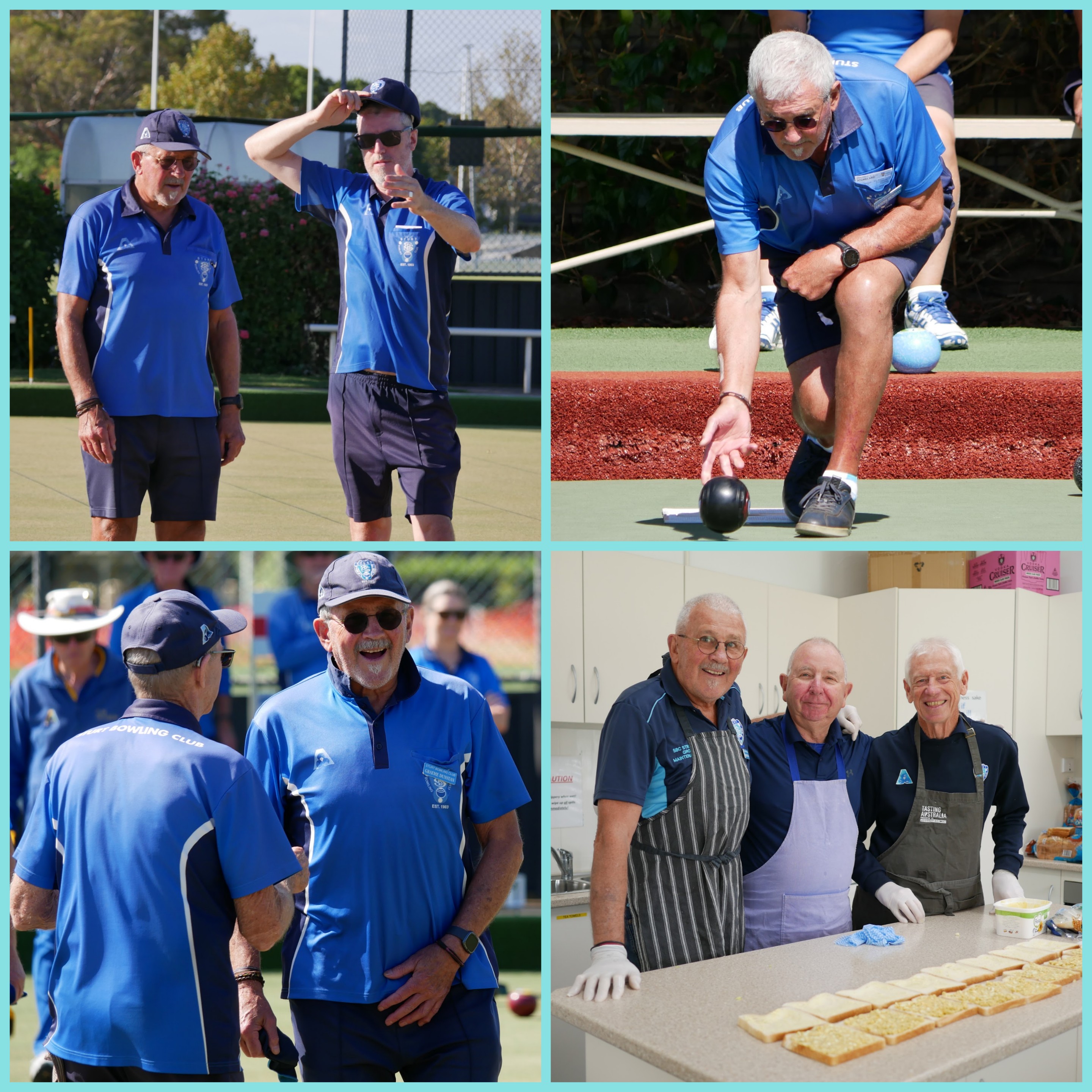
Sport has been a constant thread through Graeme ‘Mocha’ Dunstan’s life — from a country childhood at Fish Creek, through Collingwood and a premiership with Norwood, to senior roles at Sturt and the Adelaide Football Club, and now lawn bowls.
Along the way, Mocha has experienced sporting clubs from almost every angle: as a player, coach, administrator, leader and member.
His story is also one of hard work, strong relationships and a lifelong desire to keep learning — balanced by an honest acknowledgement of the sacrifices his sporting and professional ambitions sometimes demanded from his family.
Now at Sturt Bowling Club, Mocha values the same things he has appreciated throughout his life in sport: friendship, inclusion, competition, shared goals and the enjoyment that comes from being part of a club.
Mocha, you grew up at Fish Creek in South Gippsland, Victoria, where your father Maurie had settled after playing for Collingwood. What was your childhood like?
I loved growing up in the country – playing footy, cricket, basketball, tennis, distance running and fishing. School was a necessary distraction, but I had plenty of mates that made the 12-kilometre bus ride each way, every day, worthwhile.
I understand your nickname 'Mocha' was passed from your father to you. How did that happen?
My understanding is that, in the olden days, anyone called Maurice was nicknamed Mocha. So small-town sporty thinking, I inherited the nickname ‘Little Mocha’ which shortened to Mocha as I grew up and it stuck – as it did with my younger brother Ian, two years my junior.
Dad played 72 games with Collingwood before moving to Fish Creek as their very successful senior coach – six premierships in six years.
And how important was football in your family?
I loved footy at all levels and had reasonable success as a junior, then winning the Fish Creek A Grade Best & Fairest as a 17-year old.
My dad had an incredible work ethic, which I believe I inherited and for which I am extremely thankful, but he was also very demanding and hard to please.
If I had a good game and kicked 6 goals for example, he would say I should have kicked 8 and go into detail where I could have done better.
My younger brother, Ian, played 172 games for Footscray winning their Best and Fairest 3 times and represented Victoria a number of times before moving to North Melbourne playing 6 games in two injury-ridden seasons.
In playing terms, I was clearly the dud of the family.
You followed your father to Collingwood and played 31 senior games, including 30 in 1973 and 1974. What are your strongest memories of playing for Collingwood in that era?
We were an extremely strong club when I was there.
My first game was at full forward in a semi-final against St Kilda at the MCG in front of 91,857 people.
I had a reasonable game with plenty of opportunities but unfortunately kicked inaccurately finishing with 2 goals 5 behinds … and we lost by 3 goals.
Dad would have kicked 7!
Two things I’m proud of: my first and last games were finals and my win/loss record at Collingwood was 84% (26 wins from 31 games).
In 1975 you moved to Adelaide to play for Norwood and, in your first season, were part of the premiership team that ended the club’s 25-year premiership drought, in front of more than 53,000 people at Football Park. What do you remember most vividly about that season and the Grand Final?
In 1975, I dislocated my elbow playing at full forward for Norwood in the last trial game against the Eagles and missed the first 8 games of the year, but I loved the club and my new teammates.
Glenelg were clearly the best side that year, but grand final day, we gave everything for each other to pull off a magnificent Premiership win against the odds.
Interestingly I was recruited to Norwood as a full forward but given the slow recovery from the dislocated elbow – I couldn’t straighten my damaged arm properly – I played most of the year as a half forward flanker and finished the Grand Final in the back pocket standing Glenelg rovers Hodgeman and Rady.
Remember when we used to play in positions?
Two years later you represented South Australia against Western Australia. What did it mean to you, as a Victorian who had come to Adelaide only a couple of years earlier, to be selected to represent South Australia?
An absolute honour, but sadly, it was so stressfully overwhelming that I remember very little about the day.
Given the experience, I would have loved to play a second State game – an opportunity missed.
Football has occupied a large part of your life, both as a player and professionally. What about life away from football — can you tell us a little about your family and how you balanced family life with the demands of the game?
My family, and Kerrie in particular, have made huge sacrifices right through my professional and sporting career to the point where I have often been selfish in trying to achieve my goals.
I have always been a workaholic and a ‘balanced family life’ is something that I often had to be reminded of in our partnership of 54 years.
I am extremely lucky to have a beautiful, healthy and happy family who I love spending time with and prioritise more now that I have retired – and more than I had in the past.
After your VFL and SANFL playing career finished, you had extensive experience as a coach, including at Athelstone, Tea Tree Gully and Tanunda. What did coaching teach you about managing people and getting the best out of a group?
It was all about developing strong relationships and having respect for people at all levels within the clubs – players, coaches, trainers, volunteers and supporters.
Then it came down to setting goals and standards, working hard to achieve those goals and most importantly, having fun at the appropriate times to celebrate and enjoy your wins in achieving goals, no matter how small.
I always tried to lead by example, and I did enjoy the ‘social connection’.
You became General Manager of Sturt Football Club in 1998 and stayed until 2004, a period that included the club’s 2002 SANFL premiership. What were the major challenges when you arrived at Sturt, and what achievements from those seven years give you the greatest satisfaction?
When I went to the Club we were coming off seven years at the bottom of the ladder and in real financial strife.
The Board had a 5-year plan, and my role was to implement those strategies with my number one priority – success on the field.
Everything came to a head in 2002 after making the hard call at the end of 2001 season in ‘not extending’ Phil Carmen’s contract, following 7 years in the role, and appointing Brenton Phillips as our senior coach.
The elation and joy of winning the 2002 Premiership was torn away when I was awoken by a phone call from Tim Weatherald’s father Michael, at approximately 1.05am one week later on Sunday 13 October that Tim had just called advising him that he had just climbed out of the Sari Club in Bali where 18 players and Bob Marshall were celebrating their magnificent season.
He told Michael he thought he was the only survivor.
My role in the hours, days, weeks and months managing the aftermath of that horrific event is clearly my most satisfying achievement.
In 2005 you moved to the Adelaide Football Club as Football Manager and subsequently spent many years with the Crows, including working with its SANFL team. Looking back, what did you most enjoy about working inside an AFL club?
I will forever appreciate the fact that I was given the opportunity to work with elite athletes and coaches …. and get paid for it!
Over the years, I had – and still have – strong relationships and friendships with players, coaches and staff and that has meant the highs and lows have been extreme. And believe me, it’s not ‘just a game’.
You have spent much of your life leading and managing people — as a coach, club General Manager and football administrator — and you were also involved in the Crows’ leadership program. What have all those experiences taught you about good leadership?
I have always been a sponge – wanting to learn and improve.
I certainly vacuumed plenty of knowledge and skills from involvements with some elite coaches, leaders and managers over the years but for me the most important thing is developing strong relationships with people based on trust and them knowing I will work my arse off to assist them in becoming a better player, coach, manager and person in achieving their goals.
I have always had a positive attitude.
After so many years involved in football, when did lawn bowls enter the picture, and what attracted you to the game?
I played Night Owls for a few years with family and friends when I was working with the Crows. Then after I retired in 2020, I started playing pennants.
Bowls gave me the opportunity to play competitive sport with a battered body and decaying mind and continue in a club environment with new friends.
You won the Open Pairs Championship at Sturt in 2024 with your son-in-law, Jonathan Webster. What did it mean to you to win a club championship together?
To achieve that with a family member makes it very special.
I must admit I did follow some excellent advice from a heckling spectator in one of our early knockout games that year – ‘bowl long and stay out of his way’ – and it worked beautifully.
I really enjoy all Jonathan’s achievements at the Club – he’s a cracker.
What have you particularly enjoyed about lawn bowls and being involved at Sturt Bowling Club?
In general, the Club is extremely friendly and caring, and a positive community environment where you get the opportunity to have a win every now and then.
I do enjoy a win, but I can also enjoy a loss if I bowl well and get beaten by someone who played better – shake his/her hand and say ‘well done – you were too good today’.
Bowling poorly is not fun … so I am enjoying Izzy’s coaching, and other support from club members.
You have experienced sporting clubs from almost every perspective — as a player, coach, administrator and now a bowls club member. From that experience, what do you think Sturt Bowling Club does particularly well, and what are the things that any successful sporting club needs to preserve and keep working at?
Without a doubt, the growth, inclusion and development of women bowlers in the club has been extraordinary.
Peter Hughes’ coaching program should be celebrated and encouraged further as it continues to grow. I have spoken about my appreciation of elite sport - this program itself is elite.
We are clearly a much better club with the women on board.
Looking back over such a long involvement in sport, from Fish Creek and Collingwood through Norwood, Sturt, the Crows and now lawn bowls, what has sport contributed to your life?
Wow – because of my obsession and commitment to sport and the social attachments, there have been sacrifices and issues with my beautiful family that we have had to work through and can’t be disregarded.
But I cannot express enough the gratitude for the opportunities and experiences that I have been given.
I love my family and I have loved my involvement in sport at all levels.